

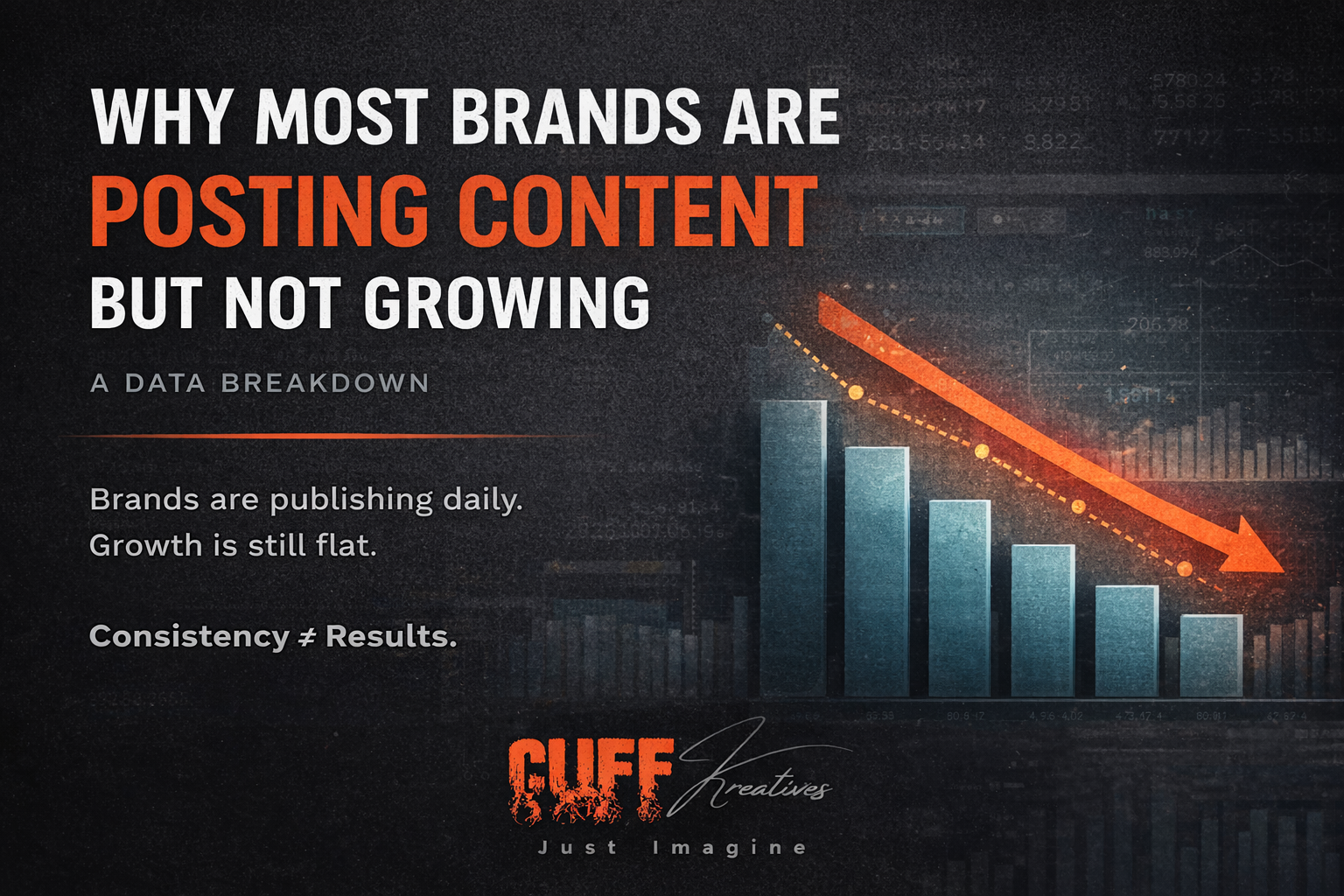
A Data Breakdown
Most brands believe consistency is the problem.
“If we post more, growth will come.”
The data tells a different story.
Across industries, brands are publishing content daily yet reach stagnates, engagement plateaus, and business impact remains unclear. The issue isn’t effort. It’s what brands are measuring, optimizing, and reacting to.
Posting More Content Does Not Equal Growth
Data from multiple platform dashboards shows a recurring pattern:
- Posting frequency increases
- Content output improves visually
- Growth metrics remain flat
Why?
Because platforms don’t reward activity. They reward audience response signals.
When content is published without intent, strategy, or measurement, it becomes noise regardless of how often it appears.
The Vanity Metrics Trap
Most brands optimize for what looks good in reports, not what drives results.
Common vanity metrics:
- Likes
- Views
- Follower count
These metrics provide visibility—but little direction.
Performance metrics that actually matter:
- Saves
- Shares
- Profile visits
- Inbound messages
- Watch time
- Return visits
Data consistently shows that content with fewer likes but higher saves and shares drives more long-term reach than content that simply “performs well” at first glance.
What Algorithms Are Actually Measuring
While each platform has its own system, their priorities are remarkably similar.
Algorithms reward content that:
- Holds attention
- Triggers deliberate action
- Signals value to a specific audience
This means:
- Scroll-stopping visuals matter less than retention
- Viral moments matter less than repeat interaction
- Pretty content matters less than useful content
If your content isn’t being saved, shared, or revisited, platforms quietly deprioritize it no matter how consistent your posting schedule is.
The Hidden Cost of Repetitive Messaging
Another overlooked data pattern is content fatigue.
Brands often repeat the same message in different formats, believing repetition builds familiarity. In reality, platforms register diminishing returns when audiences stop responding.
Signs of saturation:
- Declining reach per post
- Fewer comments from core followers
- Stable impressions but lower interaction rates
Data shows that audiences respond better to progressive narratives ideas that evolve, deepen, and build rather than recycled messages.
A Simple Data-Led Content Shift
Brands that break the stagnation pattern usually make three strategic changes:
- Measure intent, not applause
Focus on saves, shares, and profile actions. - Optimize for depth, not volume
Fewer posts with clearer value outperform high-frequency posting. - Use data as feedback, not judgment
Data doesn’t punish creativity it guides it.
Growth happens when content decisions are based on evidence, not assumptions.
Final Thought
Most brands aren’t failing because they don’t post enough.
They’re failing because they’re guessing.
Data doesn’t remove creativity it gives it direction. And in a landscape where attention is limited, clarity always outperforms noise.